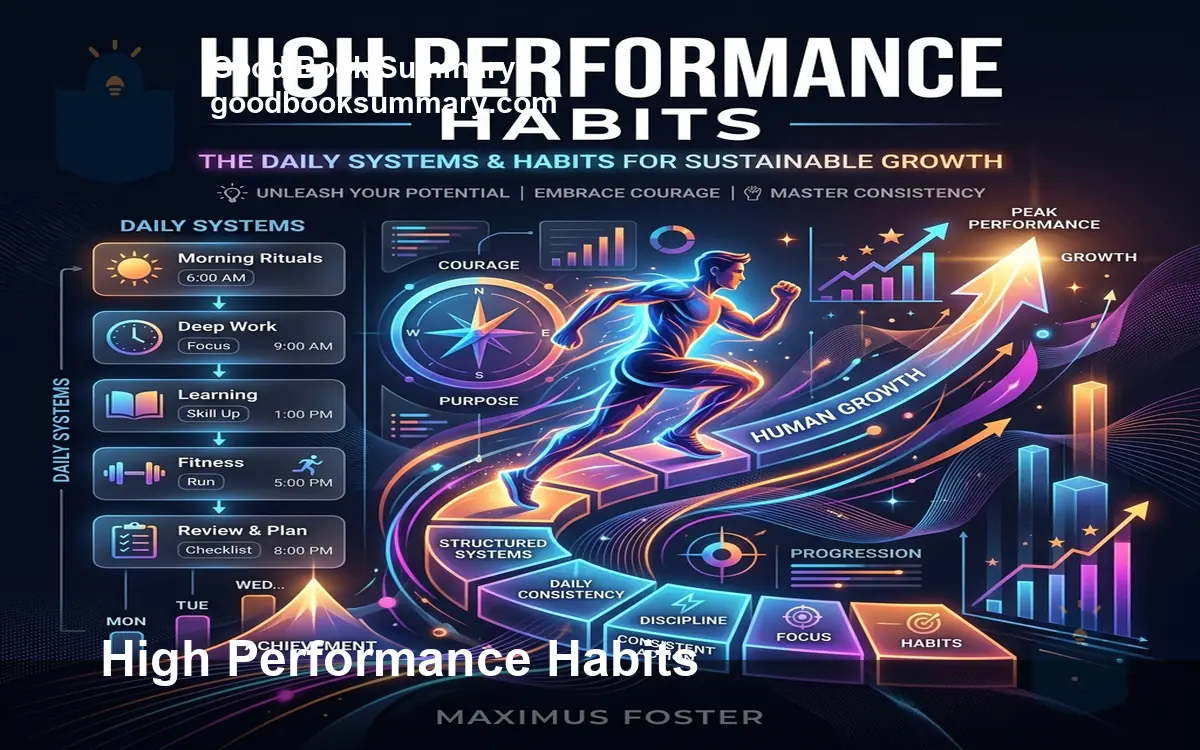
The central message becomes especially relevant in an environment shaped by constant digital distractions, hybrid work, and information overload. Sustainable success depends less on isolated moments of brilliance and more on intentional systems that consistently produce meaningful action.
| Dimension | High Performers | Underperformers |
|---|---|---|
| Handling deadlines | Focus on meaningful priorities driven by genuine deadlines | Frequently react to artificial urgencies and unnecessary deadlines |
| Self-monitoring | Regularly evaluate whether daily actions match personal standards | Rarely review progress and often avoid self-evaluation |
| Relationship with meaning | Approach work through contribution and service | Focus primarily on minimum required effort |
| Response to achievement | Experience satisfaction while continuing to improve | Often become trapped in chronic dissatisfaction and perfectionism |
The comparison reveals an important distinction. High performance is defined less by intelligence than by repeated behavioral choices made throughout ordinary days.
What Is the Main Summary of High Performance Habits?
High Performance Habits argues that extraordinary long-term success comes from six intentional habits rather than natural ability. Brendon Burchard maintains that clarity, energy, necessity, productivity, influence, and courage can be consciously developed by almost anyone, allowing consistent achievement without depending on demographics or innate talent.
Why the book challenges traditional success theories
Brendon Burchard rejects the assumption that exceptional performers belong to a rare category of gifted individuals. Research discussed throughout the book suggests that age, education, income, gender, nationality, and similar demographic variables show surprisingly weak relationships with sustained high performance.
Instead, repeated behavioral patterns explain a much larger share of long-term success.
High performance is behavior before identity
High performance emerges through repeated intentional decisions rather than personality labels.
A person does not become productive because productivity is part of an identity. Productive behavior performed consistently eventually shapes identity itself.
Deliberate habits outperform occasional motivation
Temporary motivation fluctuates with mood and circumstance.
Deliberate habits continue functioning even when enthusiasm disappears, making consistency more reliable than inspiration.
"During our own experiments with structured weekly planning, motivation disappeared several times. Scheduled routines continued producing measurable progress despite inconsistent emotional states, supporting one of the strongest practical observations from the book."
What Are the Key Takeaways from High Performance Habits by Brendon Burchard?
High Performance Habits teaches that long-term excellence depends on six learnable behaviors: seeking clarity, generating energy, raising necessity, increasing productivity, developing influence, and demonstrating courage. The framework emphasizes intentional practice, continuous self-monitoring, meaningful contribution, and disciplined execution rather than talent alone.
High performance depends on six interconnected habits
Each habit strengthens the others instead of operating independently.
Weakness in one area often limits growth across the remaining dimensions.
Seek Clarity
Seeking clarity means intentionally defining who you want to become, how you want to interact with others, which skills deserve attention, and what contribution creates meaning.
The framework organizes these reflections through the Future Four categories:
- Self
- Social
- Skills
- Service
Generate Energy
Generating energy extends beyond physical exercise.
Mental recovery, emotional regulation, joyful engagement, and healthy transitions between activities all contribute to sustainable performance capacity.
Research referenced in the book indicates that top-performing individuals exercise substantially more frequently than average peers, while senior executives often maintain energy profiles comparable to elite athletes.
Raise Necessity
Necessity transforms optional goals into personal obligations.
When achievement becomes connected with identity, responsibility, and contribution to others, execution improves because performance feels required rather than desirable.
Increase Productivity
Productivity focuses on meaningful output instead of constant activity.
Brendon Burchard introduces the concept of Prolific Quality Output, encouraging professionals to maximize valuable work instead of maximizing hours worked.
Develop Influence
Influence grows through teaching, modeling behavior, encouraging growth, and helping others think independently.
Authority emerges from contribution rather than position.
Demonstrate Courage
Courage requires acting despite uncertainty.
Honest communication, ambitious commitments, and willingness to defend meaningful causes distinguish sustained high performers from passive observers.
Understanding the Foundation of High Performance
High performance begins with an important philosophical shift.
Brendon Burchard argues that extraordinary achievement should not be viewed as an exclusive destination reserved for exceptional individuals. High performance represents a collection of repeatable behaviors available to anyone willing to practice intentionally.
High performance differs from occasional success
Occasional success may result from timing or fortunate circumstances.
Long-term excellence requires systems capable of producing reliable results across changing environments.
Consistency creates sustainable outcomes
Consistency compounds behavioral advantages over extended periods.
Small improvements repeated every week frequently outperform isolated bursts of extraordinary effort.
Confidence reduces burnout risk
Research summarized in the book associates stronger confidence with lower burnout probability.
Greater self-belief appears to support resilience during prolonged periods of demanding work instead of increasing emotional exhaustion.
High performance is independent of demographic background
The book repeatedly emphasizes that exceptional achievement cannot be reliably predicted from personal characteristics such as age or educational background.
Performance practices matter more than inherited attributes.
Innate talent explains less than deliberate behavior
Natural ability may create advantages.
Long-term success still depends on execution, adaptation, disciplined learning, and repeated action.
"A software engineer preparing for promotion may not outperform colleagues because of superior intelligence. Daily self-review, scheduled deep work sessions, intentional skill development, and proactive mentoring often produce stronger long-term career progression than technical knowledge alone."
Seek Clarity: The First Habit of Sustained Excellence
Seeking clarity establishes direction before action.
Without deliberate clarity, productivity risks becoming efficient movement toward unimportant objectives.
Future Four provides a practical planning framework
Future Four organizes long-term reflection into four categories instead of one overwhelming life plan.
Self
Self addresses identity and personal growth.
Questions include:
- Who do I want to become?
- Which characteristics deserve development?
Social
Social focuses on relationships.
High performers intentionally define how they wish to interact with family members, colleagues, clients, and communities.
Skills
Skills identify competencies requiring investment.
Continuous improvement prevents stagnation despite previous achievements.
Service
Service shifts attention from personal gain toward meaningful contribution.
Contribution frequently strengthens motivation because work gains broader significance.
Generate Energy: Why Sustainable Performance Requires More Than Motivation
Generating energy occupies the second position in High Performance Habits because sustained excellence depends on physical, emotional, and mental capacity. Brendon Burchard argues that depleted people rarely produce consistently valuable work regardless of intelligence or ambition.
Energy management therefore becomes a strategic discipline rather than a wellness accessory.
Physical vitality supports cognitive performance
Physical energy influences attention, creativity, emotional regulation, and decision-making.
The research presented in the book found that the highest-performing individuals exercise significantly more often than their peers, making regular movement a behavioral pattern rather than an occasional health initiative.
Exercise creates a competitive advantage
Exercise improves endurance beyond athletic performance.
Professionals who consistently maintain physical health often preserve concentration longer during cognitively demanding work.
Recovery matters as much as effort
Continuous output without recovery gradually reduces performance quality.
Intentional breaks preserve decision-making ability across extended projects.
Emotional energy can be intentionally generated
Brendon Burchard distinguishes emotional reactions from consciously cultivated feelings.
Automatic emotions occur naturally after external events, while chosen emotional states can be developed through intentional practice.
Emotion and feeling are not identical
| Dimension | Emotion | Feeling |
|---|---|---|
| Origin | Immediate physiological reaction | Conscious interpretation of experience |
| Speed | Automatic | Reflective |
| Degree of control | Limited | Can be intentionally influenced |
| Practical implication | Happens naturally | Can be deliberately cultivated |
Understanding that distinction allows individuals to actively prepare themselves before important conversations or difficult projects.
Transition rituals reduce accumulated stress
Brendon Burchard recommends intentionally resetting between activities instead of carrying previous tension into the next responsibility.
The process follows a simple sequence.
1. Pause for one or two minutes.
Take a brief mental break before changing contexts.
2. Release accumulated tension.
Relax the shoulders, neck, jaw, and back while mentally repeating the word "release."
3. Set a conscious intention.
Ask:
- What energy do I want to bring?
- How can I perform the next activity with excellence?
The routine requires only a few minutes yet creates a psychological separation between unrelated demands.
"Several members of our editorial team experimented with transition resets between writing sessions and meetings. The greatest benefit appeared not in productivity itself but in noticeably reduced cognitive fatigue late in the workday."
Raise Necessity: Why Commitment Outperforms Preference
Necessity transforms optional ambitions into unavoidable responsibilities.
Brendon Burchard explains that people often possess adequate knowledge yet fail to execute because desired outcomes remain preferences instead of obligations.
Internal necessity changes behavior
Internal necessity originates from identity.
People who believe excellence defines who they are naturally maintain higher standards than individuals pursuing temporary external rewards.
Identity strengthens consistency
Identity-based motivation survives temporary setbacks.
Someone who identifies as a disciplined learner continues studying after disappointing results because discipline remains part of personal self-concept.
Emotional attachment increases persistence
Meaningful emotional investment increases resilience during difficult periods.
Goals connected to contribution or personal values frequently survive obstacles that eliminate purely financial motivations.
External necessity reinforces accountability
External expectations also increase execution quality.
Responsibility toward family members, colleagues, customers, or communities creates additional motivation beyond personal ambition.
Self-monitoring dramatically improves outcomes
The research summarized in the book reports that individuals who regularly monitor progress become approximately two and a half times more likely to achieve their goals.
Frequent evaluation therefore functions as an execution multiplier.
Artificial urgency reduces meaningful work
Underperformers commonly respond to interruptions that appear urgent but produce little value.
High performers instead distinguish genuine priorities from distractions before allocating attention.
Increase Productivity Through Prolific Quality Output
Brendon Burchard defines productivity differently from traditional time management systems.
The objective is not maximum activity but maximum valuable contribution.
Prolific Quality Output emphasizes meaningful production
Headword — Prolific Quality Output (PQO): Producing more high-quality work than peers over extended periods within a chosen field.
PQO prioritizes significance over quantity.
Busy calendars do not automatically indicate productive careers.
Output matters more than visible effort
Meetings, emails, and administrative tasks create activity.
Meaningful deliverables create measurable progress.
High performers protect creative capacity
Exceptional performers intentionally reserve substantial uninterrupted time for important projects rather than filling calendars with reactive obligations.
The Five-Move Planning Framework
Brendon Burchard recommends reducing strategic complexity by concentrating on five major initiatives instead of dozens of simultaneous objectives.
The framework simplifies execution without reducing ambition.
Five-Move Planning creates focus
The planning process converts broad aspirations into manageable execution systems.
1. Decide on one ambitious objective
Select one clearly defined long-term outcome.
Ambiguous goals produce scattered attention.
2. Identify only five major moves
Ask:
"If only five major projects could achieve the objective, what would they be?"
Break each project into concrete deliverables.
3. Protect deep work time
Reserve approximately sixty percent of available working hours for concentrated execution on those major projects.
Calendar protection prevents reactive scheduling.
4. Contain distractions
Administrative responsibilities, interruptions, and low-value obligations should occupy the remaining available capacity whenever possible.
"A founder launching a software platform might define five major initiatives as product development, customer acquisition, hiring, infrastructure, and strategic partnerships. Daily activity outside those priorities receives secondary attention unless genuine emergencies arise."
Progressive Mastery: A Structured Path to Expertise
Progressive Mastery expands beyond traditional deliberate practice by integrating emotional commitment, social interaction, feedback, and teaching.
Brendon Burchard presents mastery as a continuous developmental cycle rather than a final destination.
Progressive Mastery follows ten reinforcing stages
Every stage strengthens long-term skill acquisition.
1. Choose a primary skill
Identify the capability that deserves concentrated investment.
2. Set stretch goals
Select objectives beyond current comfort levels.
3. Build emotional attachment
Connect meaningful personal purpose to improvement.
4. Analyze strengths and weaknesses
Develop existing advantages while correcting limitations.
5. Visualize success and failure
Construct detailed mental models before execution.
6. Schedule difficult practice
Practice should intentionally create challenge instead of comfort.
7. Measure progress
Objective feedback prevents inaccurate self-assessment.
8. Learn socially
Practice alongside peers whenever possible.
9. Continue raising standards
Achievement should trigger new developmental targets.
10. Teach others
Teaching exposes hidden assumptions and deepens understanding through explanation.
The framework demonstrates that expertise emerges through iterative refinement rather than isolated talent.
How to Apply the Key Concepts of High Performance Habits in Daily Life?
Applying the principles from High Performance Habits begins with intentional planning rather than dramatic lifestyle changes. Daily clarity, scheduled energy management, meaningful priorities, consistent self-monitoring, and courageous action gradually compound into long-term performance gains when repeated over months and years.
The practical value of Brendon Burchard’s framework comes from repetition. The six habits reinforce one another, creating a cycle in which better decisions produce better results and better results strengthen future discipline.
A practical morning implementation routine
Many readers understand the concepts intellectually but struggle to translate them into ordinary workdays. A structured routine closes that gap.
1. Review the Future Four
Spend five minutes reflecting on four questions:
- Who do I want to become today?
- How should I show up for other people?
- Which skill deserves attention?
- How can I contribute through service?
Those prompts establish direction before reactive tasks consume attention.
2. Identify today's Prolific Quality Output
Select one meaningful deliverable before checking messages or attending meetings.
Examples include:
- Completing a product proposal
- Writing an important chapter
- Preparing a client presentation
- Designing a software feature
The objective should create measurable progress instead of activity.
3. Reserve uninterrupted deep work
Protect focused working time on the calendar.
Notifications, unnecessary meetings, and low-priority requests should remain outside those blocks whenever possible.
4. Perform transition resets
Before every significant activity:
- Pause briefly.
- Release accumulated tension.
- Decide which emotional state to bring into the next responsibility.
Small resets reduce mental carryover between unrelated contexts.
5. Evaluate progress before ending the day
Ask three questions:
- Did today's actions match my standards?
- What created the highest value?
- What deserves improvement tomorrow?
Daily reflection transforms experience into learning.
Applying the habits inside organizations
Organizations benefit from the same principles because teams consist of individual behavioral systems.
Leadership becomes clearer through service
Managers who consistently ask, "How can I help my team succeed?" often build stronger trust than leaders focused exclusively on performance metrics.
Service creates influence.
Deep work increases organizational effectiveness
Many companies unintentionally reward responsiveness instead of meaningful production.
Protecting uninterrupted project time frequently improves quality while reducing employee frustration.
Courage improves communication quality
Constructive feedback becomes easier when honesty develops into a cultural expectation rather than an uncomfortable exception.
Connecting the Six Habits Into One System
The six habits should not be interpreted as independent checklists.
Brendon Burchard presents an integrated operating model in which every behavior supports the others.
Clarity influences productivity
People rarely produce meaningful work without understanding priorities.
Direction determines execution quality.
Energy supports courage
Physical exhaustion often reduces willingness to take difficult actions.
Rested individuals generally communicate more honestly and make stronger decisions.
Necessity strengthens consistency
Goals connected with personal responsibility survive motivational fluctuations more effectively than casual ambitions.
Productivity amplifies influence
People naturally trust individuals who repeatedly produce valuable work.
Reliable contribution strengthens credibility.
Influence expands courage
Supportive relationships often make ambitious action psychologically easier.
Communities reduce perceived personal risk.
The interaction among all six habits explains why isolated productivity techniques frequently produce disappointing long-term outcomes.
Reader Perspective: Balanced Evaluation of High Performance Habits
Every influential business book contains strengths and limitations. High Performance Habits offers practical frameworks while also reflecting a specific coaching philosophy.
Positive perspectives
Analyzing the methodology of Brendon Burchard reveals several strengths that benefit readers. These positive aspects highlight why the six habits are highly applicable to professional and personal settings.
The framework emphasizes learnable behaviors
One of the strongest contributions involves shifting attention away from innate talent toward repeatable practices.
Readers gain actionable systems instead of abstract inspiration.
Research supports many recommendations
Behavioral observations, performance studies, and coaching experience reinforce several central arguments throughout the book.
The discussion around self-monitoring, energy management, and focused execution aligns with broader findings from performance psychology.
Immediate implementation is possible
Many recommendations require little financial investment.
Reflection exercises, planning systems, and transition rituals can begin immediately.
Critical perspectives
While the framework provides substantial value, it is important to examine its potential drawbacks. These critical viewpoints outline where the concepts might require adaptation or additional support in practice.
Some concepts intentionally simplify complexity
Human performance depends on numerous biological, economic, and environmental variables.
The six habits explain many patterns but cannot eliminate structural disadvantages or unpredictable life circumstances.
Coaching language occasionally dominates scientific discussion
Readers seeking highly technical academic analysis may prefer complementary literature from cognitive psychology or behavioral science.
Sustained discipline remains difficult
Knowing the framework differs from maintaining daily execution.
Many readers require accountability systems before habits become automatic.
"The greatest challenge observed during our own implementation experiments was not understanding the six habits. Maintaining consistent execution after several weeks proved substantially more difficult than learning the concepts themselves."
Final Synthesis
High Performance Habits presents a compelling argument that sustained excellence emerges from deliberate choices repeated over long periods rather than extraordinary talent.
Brendon Burchard organizes those choices into six mutually reinforcing habits: clarity creates direction, energy supports endurance, necessity fuels commitment, productivity concentrates effort, influence expands impact, and courage enables decisive action.
Viewed together, the framework becomes less a motivational philosophy and more a practical operating system for professionals seeking consistent long-term improvement in demanding environments.
Related Book Summaries
Related Book Summaries:
- Atomic Habits
- Deep Work
- The 7 Habits of Highly Effective People
- The Power of Habit
- Essentialism
- The One Thing
- Mindset
- Grit
- Peak
Taken together, those books approach long-term achievement from complementary perspectives, including behavioral design, focused attention, deliberate practice, psychological resilience, and strategic prioritization.